Generative AI for Natural Language Processing course | Post Graduate Program in Artificial Intelligence and Machine Learning – The university of texas at austin – november 2026
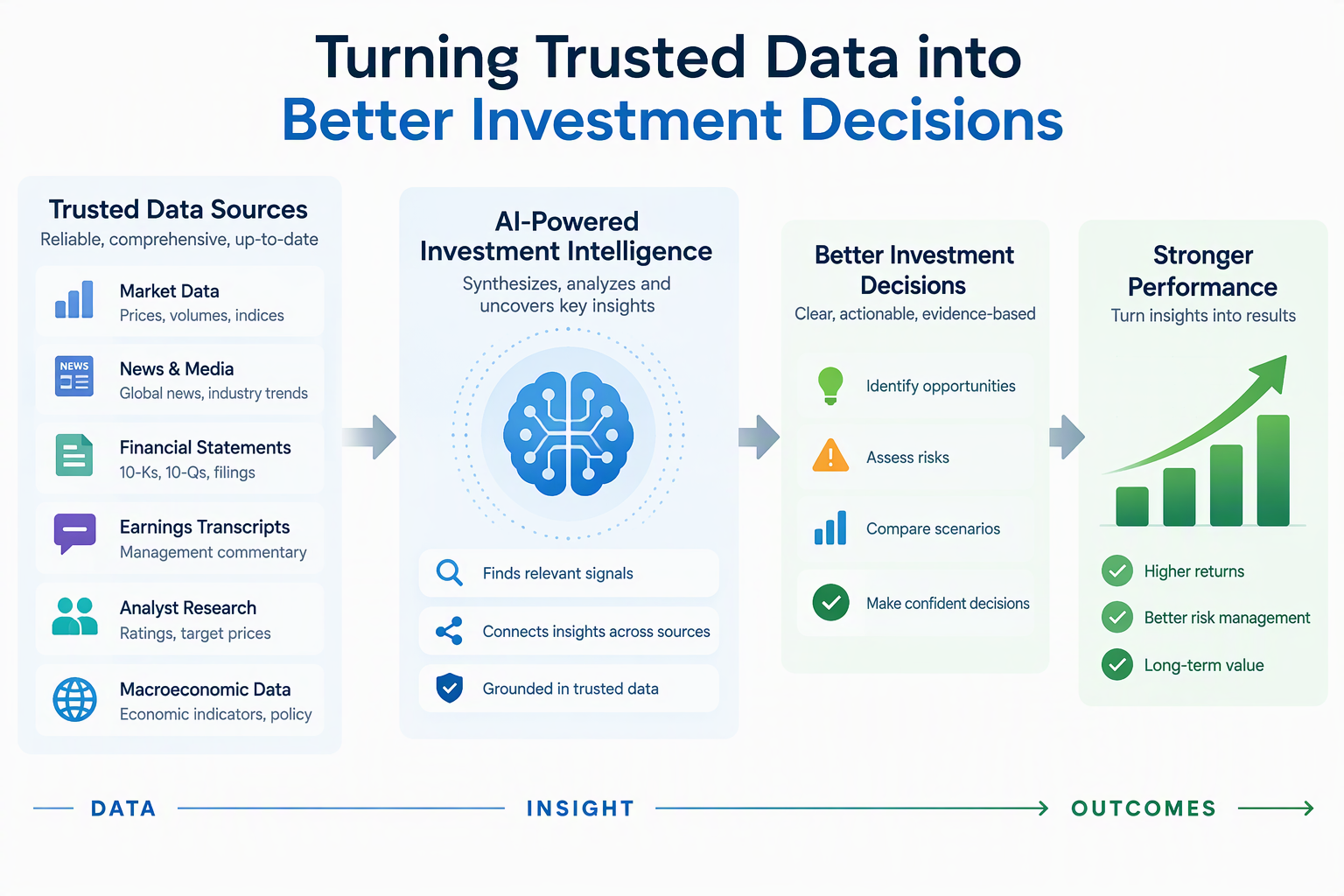
Turning Information into Investment Advantage
Develop a natural language market intelligence system (Driving Investment Performance through Grounded Synthesis) for GlobalEdge brokers that ingests financial news articles and regulatory filings and makes them queryable through plain-language questions, enabling brokers to ask questions like “which S&P 500 stocks have risk disclosures filed this week?” and receive sourced, grounded answers with full citation details, reducing compliance exposure and building client trust, eliminating all technical dependencies so the system is universally accessible to non-technical users, with success defined by brokers meaningfully expanding their pre-call market coverage within their first week of use..
Vector Databases and Semantic Search | Text Processing and Chunking | Embeddings | Large Language Models (LLMs) | Prompt Optimization | LLM Evaluation Metrics | Hyperparameter Tuning | Retrieval Augmented Generation(RAG)
Predictive Modeling with Machine Learning and Neural Networks course | Post Graduate Program in Artificial Intelligence and Machine Learning – The university of texas at austin – OCTOBER 2026
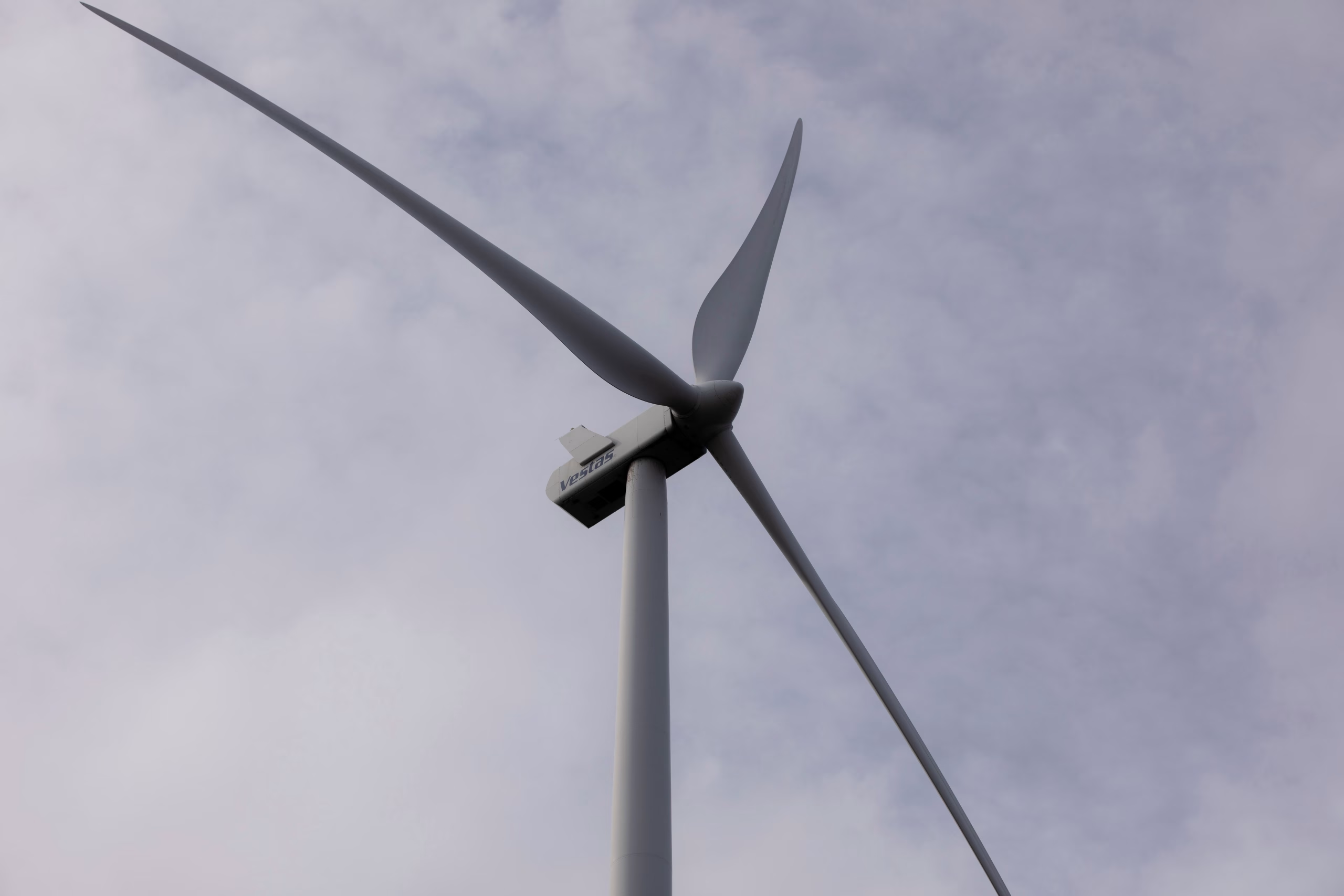
Wind Turbine Failure Detection
Develop a machine learning solution for Aeolus Renewables, an independent power producer operating a fleet of 1,150 onshore wind turbines, that analyzes wind turbine sensor data to detect drivetrain failures before they become critical, enabling condition-based maintenance, reducing unplanned downtime, lowering maintenance costs, and maximizing energy generation across the turbine fleet.
Neural Networks | Random Forest | Decision Tree | Boosting | Hyperparameter Tuning | Feature Importance | Data Preprocessing | Exploratory Data Analysis
capstone project | Post Graduation in Machine learning and Artificial intelLigence – international institute information technology bangalore – May 2023.
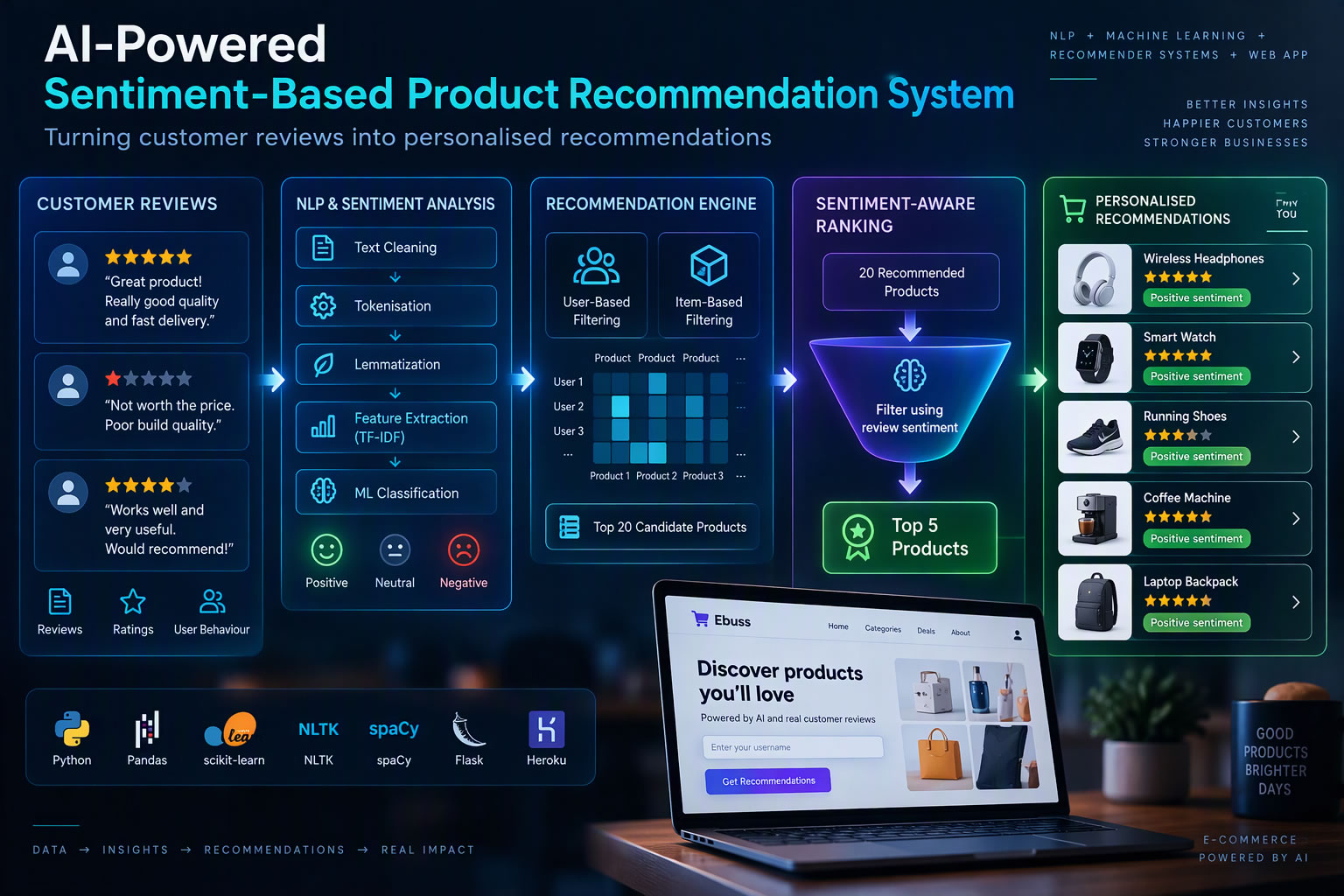
AI-Powered Sentiment-Based Product Recommendation System
Develop an AI-powered product recommendation system that combines collaborative filtering with Natural Language Processing and machine learning-based sentiment analysis to deliver personalised e-commerce recommendations, analysing customer ratings and product reviews to identify user preferences, predict review sentiment, rank candidate products and recommend products with the most positive customer feedback, enabling more relevant recommendations and demonstrating an end-to-end machine learning solution from data preprocessing and model development to web deployment.
Recommendation Systems | Sentiment Analysis | Natural Language Processing | Machine Learning | Collaborative Filtering | Text Classification | TF-IDF | Logistic Regression | Random Forest | XGBoost | Naive Bayes | User-Based Collaborative Filtering | Item-Based Collaborative Filtering | Model Evaluation | Python | Flask
MlOps course | Post Graduation in Machine learning and Artificial intelLigence – international institute information technology bangalore – March 2023.
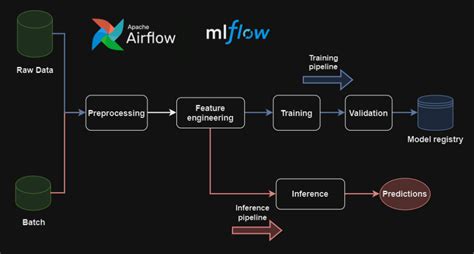
End-to-End MLOps Platform
Develop an end-to-end MLOps platform that automates the complete machine learning lifecycle through dedicated data, training, and inference pipelines, using Apache Airflow for workflow orchestration, MLflow for experiment tracking and model management, Docker for containerisation, and CI/CD for automated testing and deployment, enabling reproducible model training, version-controlled experimentation, scalable inference, continuous performance monitoring, and reliable deployment of machine learning models into production.
MLOps | Machine Learning Pipelines | Apache Airflow | MLflow | Docker | Model Deployment | Model Serving | Data Pipelines | Training Pipelines | Inference Pipelines | CI/CD | Model Monitoring
natural language processing course | Post Graduation in Machine learning and Artificial intelLigence – international institute information technology bangalore – January 2023.
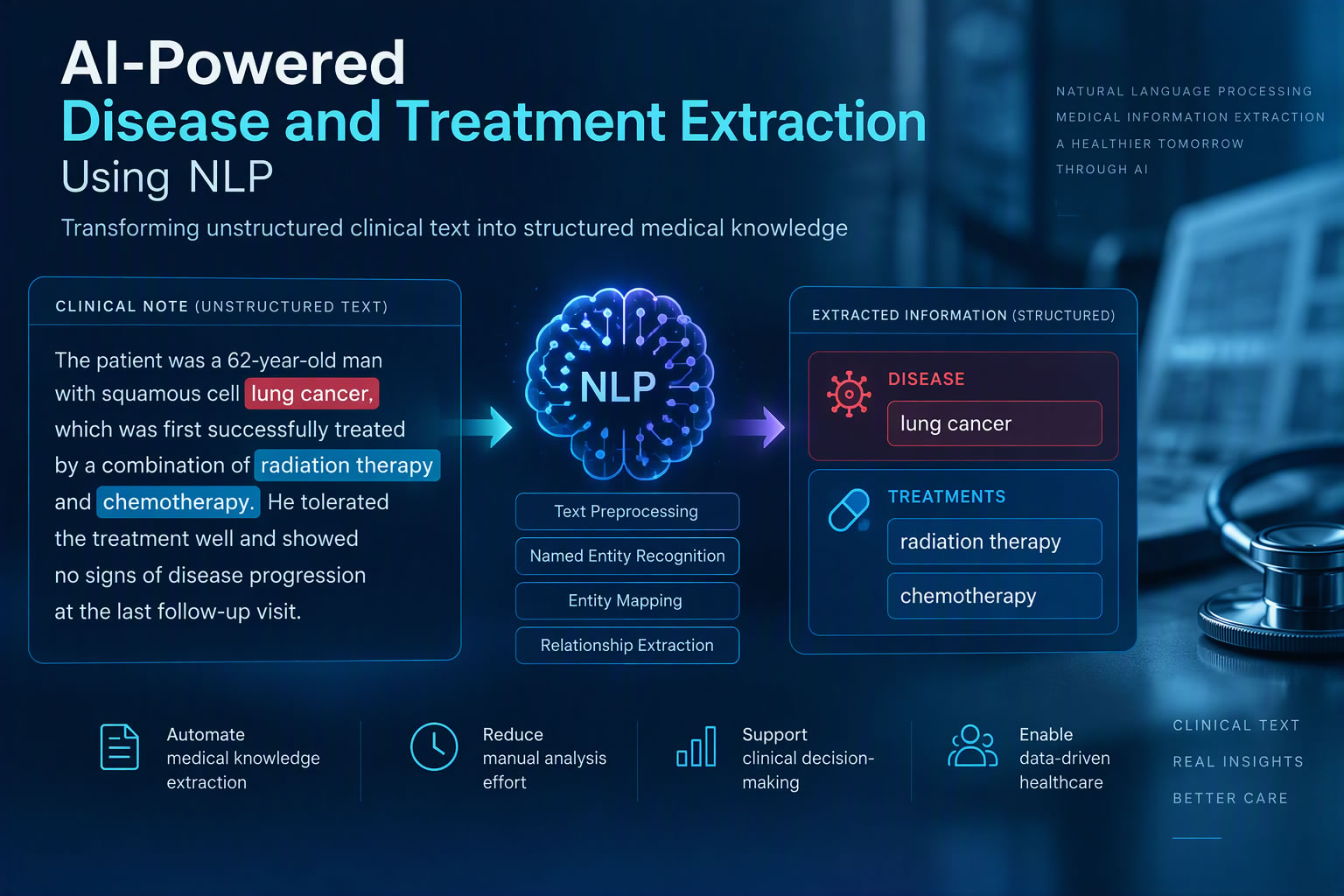
AI-Powered Disease and Treatment Extraction from Clinical Text
Develop a Natural Language Processing solution for medical information extraction that analyses unstructured clinical text using a custom Named Entity Recognition (NER) model based on Conditional Random Fields (CRF) to identify diseases and their associated treatments, enabling automated extraction of disease-treatment relationships, structuring complex medical information, reducing manual processing effort, and supporting healthcare data analysis.
Natural Language Processing (NLP) | Named Entity Recognition (NER) | Clinical Text Mining | Medical Information Extraction | Conditional Random Fields (CRF) | Disease Recognition | Treatment Recognition | Healthcare Data | Python | Jupyter Notebook | Pandas | NumPy | Matplotlib | Seaborn
DEep learning course | Post Graduation in Machine learning and Artificial intelLigence – international institute information technology bangalore – october 2022.
Melanoma Detection
Develop a deep learning solution for skin cancer diagnosis that analyzes dermoscopic images of skin lesions to accurately classify nine oncological disease categories, including melanoma, enabling early detection of malignant cases, supporting clinical decision-making, reducing diagnostic effort, and improving patient outcomes through AI-assisted medical image analysis
Deep Learning | Convolutional Neural Networks (CNN) | Computer Vision | Image Classification | Medical Image Analysis | Neural Networks | Supervised Learning | Image Preprocessing | Data Augmentation | Hyperparameter Tuning | Python | Jupyter Notebook | Pandas | NumPy | Matplotlib | Seaborn | Tensor-Flow | Keras

machine learning II course | Post Graduation in Machine learning and Artificial intelLigence – international institute information technology bangalore – september 2022.
Telecom Churn Case Study
Developed a machine learning solution for a telecommunications provider to predict customer churn using customer demographics, service usage, recharge behavior, and 2G/3G network activity data. The project involved extensive data preparation, missing-value treatment, exploratory data analysis (EDA), feature selection, dimensionality reduction using Principal Component Analysis (PCA), and predictive modeling with LightGBM. By identifying customers with a high probability of churn, the solution enables targeted retention strategies, reduces customer attrition, improves marketing effectiveness, and supports data-driven customer relationship management.
Machine Learning || Supervised Learning | Feature Selection | Feature Engineering | Dimensionality Reduction | Model Evaluation | Data Preprocessing | Exploratory Data Analysis | Python | Jupyter Notebook | Pandas | NumPy | Matplotlib | Seaborn | Scikit-learn | LightGBM | PCA |

machine learning I course | Post Graduation in Machine learning and Artificial intelLigence – international institute information technology bangalore – june 2022.
Bike Rental Study
Developed a data analytics and predictive modeling solution for a bike-sharing service to understand and forecast bicycle rental demand. The project combined exploratory data analysis (EDA), feature engineering, and regression modeling to investigate how weather conditions, seasonal variations, holidays, working days, and time-related factors influence rental activity. The resulting model was used to predict future demand, providing insights that can support fleet allocation, resource planning, operational efficiency, and customer service optimization.
Machine Learning | Regression Analysis | Predictive Modeling | Supervised Learning | Feature Engineering | Model Evaluation | Data Preprocessing | Exploratory Data Analysis | Python | Jupyter Notebook | Pandas | NumPy | Matplotlib | Seaborn | Scikit-learn

statistic essentials course | Post Graduation in Machine learning and Artificial intelLigence – international institute information technology bangalore – may 2022.
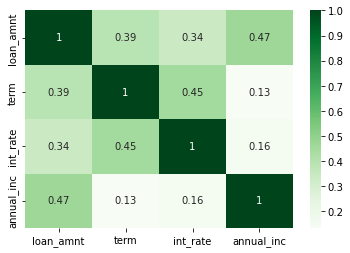
Lending Club Case Study
Performed exploratory data analysis on a large consumer lending dataset from Lending Club to investigate the relationship between borrower profiles, loan attributes, and default outcomes. Identified key risk indicators including interest rates, loan grades, income levels, verification status, loan purpose, and funding characteristics to support data-driven credit risk assessment and lending decision-making.
Data Preprocessing | Exploratory Data Analysis | Python | Jupyter Notebook | Pandas | NumPy | Matplotlib | Seaborn